A Tribute to Guido Earlin Smith, President Emeritus
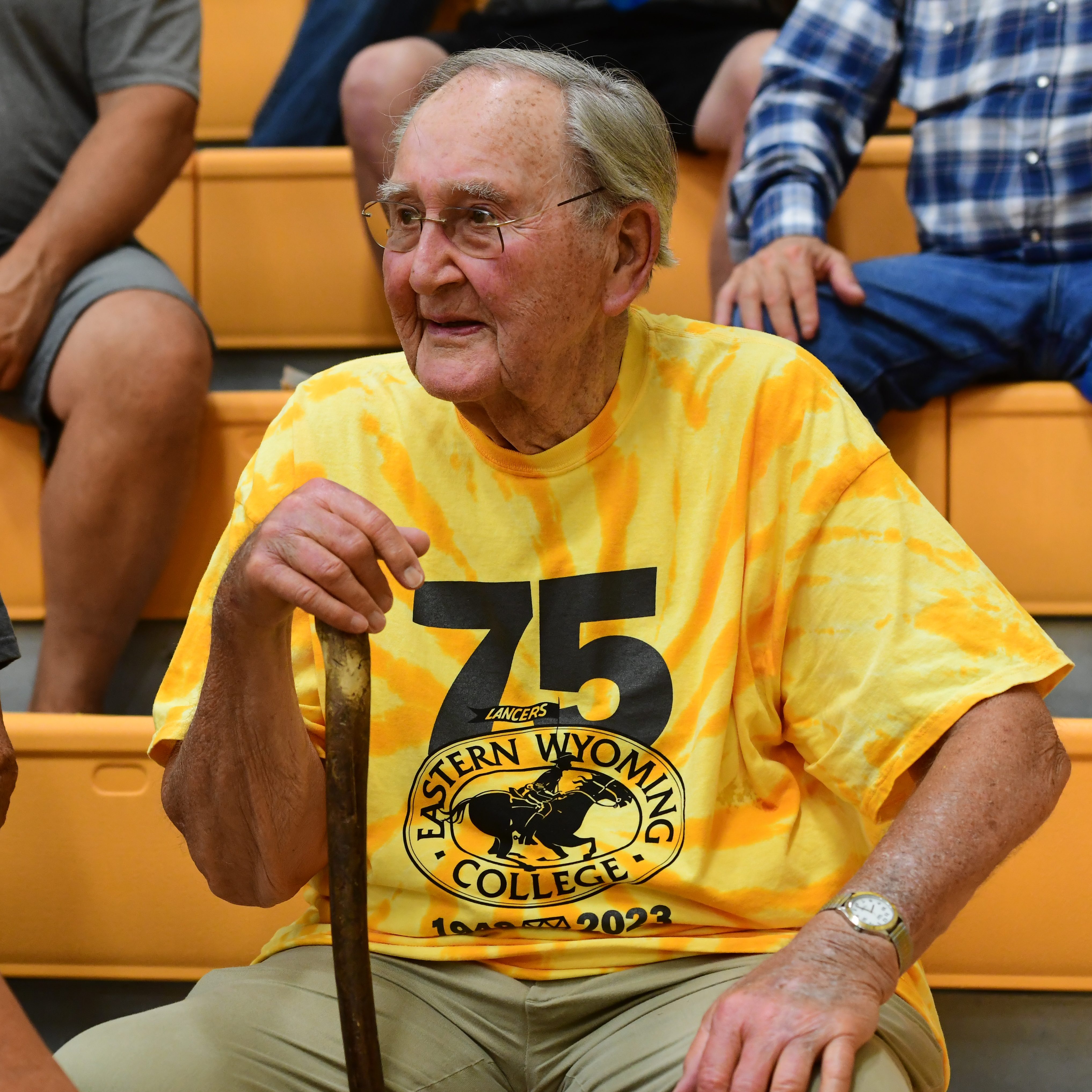
On Aug. 29, 2023, hundreds of Eastern Wyoming College alumni and Torrington community members flooded the CTEC parking lot on campus for a community tailgate event to celebrate the college’s 75th anniversary. Among them, former instructor, dean, registrar and president Guido Smith donned a bright yellow 75th anniversary t-shirt and one of his widest grins.
“I had to think how proud he was of where the institution was on that night,” long-time friend and colleague PattiSue Peterson said.
Though Smith had been retired for over 30 years at that point, Lancer blood ran through his veins. His love and dedication for the college were unmatched.
“I’ve never heard anybody say he didn’t care about the place,” former welding instructor Leland Vetter said. “It came across that EWC was very important to him, and he cared about the college.”
Though Smith’s passing left a hole in many hearts, his legacy lives on through his passion for Eastern Wyoming College and all that he did to support its students.
Learning to Teach
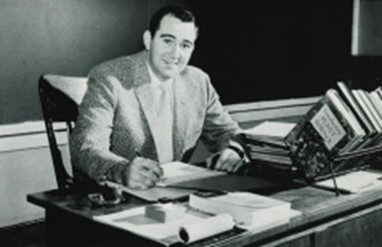
Smith’s history with EWC runs almost as far back as the college itself. Smith was hired in the college’s eighth year, tasked with building a biology program from scratch as a new graduate. At the time of his hiring, the college had been known as Southeast University Center, but later that fall, a vote renamed the school Goshen County Community College.
Armed with his bachelor’s and master’s degrees in zoology and botany from Fort Hays State University, Smith had been a bit nervous to take on the job right after graduation with no teaching experience.
“I was used to four-year institutions, but this really did open my eyes to what education was about,” he told EWC librarian Jessica Anderson on the anniversary podcast. “I didn’t have any teaching experience, but my boss, Al Conger, said we’ll teach you to be a teacher.”
And that’s what he did. With time, Smith grew confident in his ability as a biology instructor, spending 12 years in the role, impacting the lives many students.
“It changed my life,” he said on the podcast. “It really did. I really enjoyed teaching, and I loved to see the students come to life.”
In 1968, Smith took on the role of Dean of the College. Between him and then president Charles “Chuck” Rogers, they increased EWC’s reach by starting and expanding several new programs, many of which are extremely successful today.
A Leap of Faith
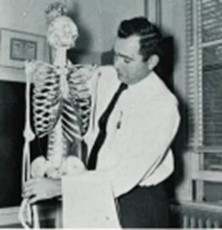
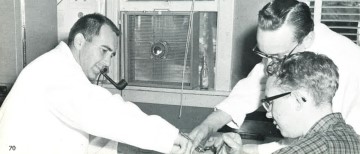
In the early 1970s, local veterinarian Dr. John Simon approached Smith with the idea of starting what was then called an animal health technology program.
While it was a great idea, finances were tough, and the program would not be cheap. However, Smith saw its potential value to the college and the community, so he, along with President Rogers, decided to move forward with the idea.
“Guido took a big leap of faith to support the foundation of that program — the purchasing of the equipment, the development of the facilities,” Peterson, former vet tech instructor and program director, said. “I know it wasn’t easy, because those were hard economic times, and money was not easy to find to spend on such things.”
That leap of faith paid off. The program was accredited in 1976, just in time before the first cohort of vet tech students graduated. Today, the program continues to produce successful graduates who go to work in vet practices or go on to pursue a higher education in veterinary medicine and veterinary science.
Peterson, who was among the second cohort of vet tech students for the budding program, now looks back and sees just how much growth the program has had since its inception and knows the future is even brighter.
“It’s grown by leaps and bounds over the years,” she said. “You look into the future, and I think with especially our mixed animal and large animal practices, the utilization of veterinary technicians in our part of the world is only going to increase.
“(I have) a lot of pride and thankfulness for the likes of Guido Smith, John Simons and (Chuck Rogers), because they put a lot of faith in those people to run the program and make it a quality program, and they have maintained it.”
One for the Students
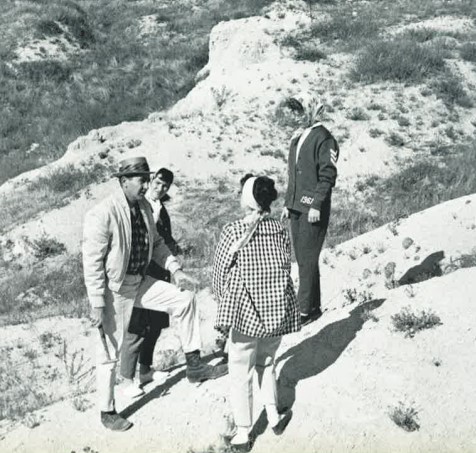
Around the same time as the vet tech program was getting underway, a handful of students had gone to Smith, asking if they could start a rodeo team at the college. Smith told them that if they could find a coach and/or sponsor for the team, then he would be more than happy to support them.
The students took it upon themselves to reach out to a woman named Bev Yeik, who wasn’t a rodeo athlete herself, but had a daughter in the sport. She agreed to sponsor the team, and the students went back to Smith with the good news. He kept his word and helped the small group of students get the program underway, providing the funds needed for things like fees, fuel and motel rooms.
Today, EWC’s rodeo program is one of the best in the state, producing several pro athletes and hall-of-famers and making the college a destination for many prospective students.
“Rodeo played a big part because of the Western lifestyle,” Vetter said.
Peterson added, “I can’t give you a count on the number of students that have come to EWC because of the rodeo program.”
Defying the Odds
Smith didn’t stop there, though. He was only getting started. Next on his mind was bringing a welding program to the college.
Smith was on the lookout for the right person to lead this effort. That’s when he ran into some welding instructors from North Dakota State College of Science at an ethanol conference.
“(Smith) said they wanted to start a welding program and they said, ‘hire this kid.’ So then Guido Smith gave me a phone call,” Vetter said.
Vetter was in his last year of schooling at the time, having already completed his welding certificate and finishing up his machine tooling program while working on a welding truck in the oil fields. He didn’t have any teaching experience and wasn’t even sure teaching was the career for him, but Smith offered him the job over a cup of coffee and a tour around campus.
“I stopped in and saw Guido. He would call it an interview, but it really wasn’t,” Vetter said. “We walked around two or three buildings on the campus, and then he offered me a job.”
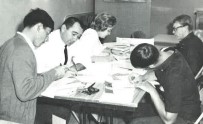
With Smith’s guidance and Vetter’s expertise, the program grew from eight students in a high school classroom to 100 students with a multi-million-dollar complex on the way by the time Vetter retired in 2014. The program had taken off.
“And it really shouldn’t have,” Vetter said, “because every college had welding— there were eight in Wyoming, one in Rapid City, one in Scottsbluff, one in Fort Collins, one in Greeley. It really shouldn’t have happened, but I’m sure we grew bigger than all of them.”
A Little Opposition
While many of Smith’s programs have played a huge role in the history and success of the college, not all of them had such rosy beginnings.
In the early 1980s, Smith decided the next program to bring to EWC was cosmetology. Originally, Huntley High School had the program, but it was Smith’s vision to bring it into town. However, the idea faced a lot of opposition from the community at first.
“There was fear of competition in the salons,” Donna Charron, current director of cosmetology at EWC, said. “But Guido ensured them that EWC would limit its clientele to full-time students and senior citizens. As he said, ‘we’re not in the competition business.’”
Eventually Smith got his wish. In 1983, EWC took on the program, though it didn’t officially move into town and onto campus until 1984, when the building was finally finished.
Bringing the program under EWC turned a certificate program into an actual college degree, giving students many more opportunities than before.
“For the first time, you had an opportunity to get a degree with a technical career program. It used to only be certificates,” Charron, who was the first cosmetology instructor for EWC, said. “Also with it being with the college, students had access to dormitories, modern facility upgrades and more clientele.”
Since that first year, the cosmetology program has grown to now include a barber program as well.
Driven by Student Success
The success of all of these programs were a testament to Smith’s visionary leadership, which was influenced by two things: his love of the school and his desire for student success.
“He wanted EWC to be supportive of our community — have faculty, staff and students contribute to the overall success of Goshen County and Torrington. And I think he believed in that,” Peterson said.
“He was really good with trying to think about what the community needed,” Charron added. “He was always thinking about how he could better it for someone else.”
That also went for his faculty and staff as well. Smith took his leadership roles, both as dean and then as president, very seriously. His belief was in order to provide a quality education for students, a college had to have quality faculty and staff. To have quality faculty and staff, administration had to support them and treat them well.
Smith was always very approachable, Ed Kroenlein, a longtime employee of the college, said. “We used to sit and have coffee and visit.”
Smith always kept himself on the same level as his colleagues. When the staff helped plant trees, Smith helped plant trees. When faculty brought cookies to graduation, Smith brought cookies to graduation.
It was always important to him to lead by example.
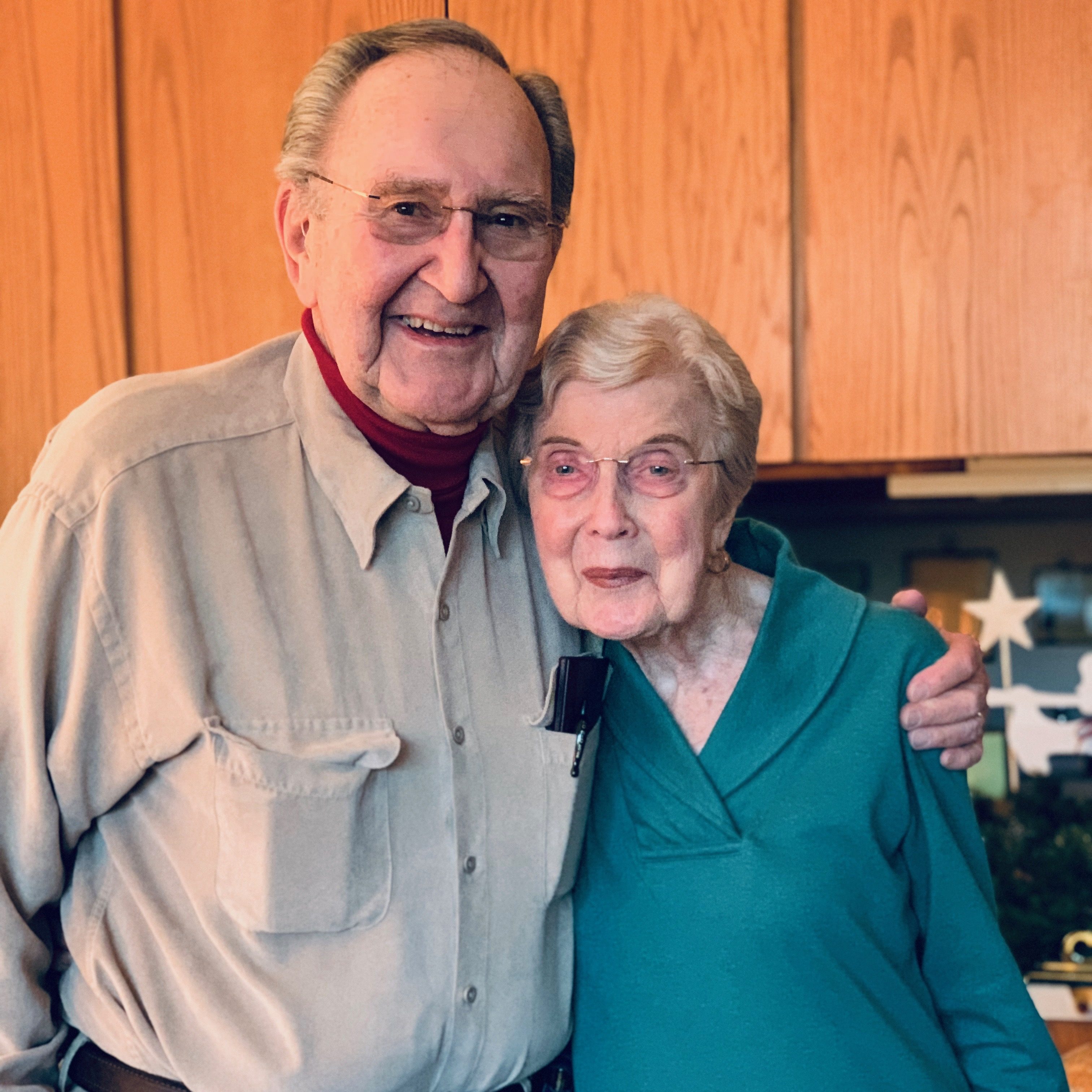
“You could sit down and talk to Guido, just like you could sit down and talk to a student,” Charron said. “He just didn’t put himself above anybody else.”
With EWC til the End
Smith became president in 1984, and continued to lead the college to new heights. He was looking for ways to make the college, and therefore the students, better.
“He was always looking at it in terms of students — how is it going to affect students? How is it going to affect the future of the college?” Rick Vonburg, former faculty and current Board of Trustees member, said. “I think he always had those things in the back of his mind.”
Upon his retirement in 1990, the EWC Board of Trustees named him President Emeritus in honor of all that he’s done for the college.
His contributions were even recognized by former Wyoming Governor Mike Sullivan, who presented him with the first Governor’s citation for meritorious service to the Wyoming Community College Commission and to the State of Wyoming around the same time.
But his commitment to EWC didn’t end there. Even after his retirement, he remained invested in the institution.
“He was dedicated to the college,” Vonburg said. “He came to a lot of athletic events and most graduations. He was always interested in the students.”
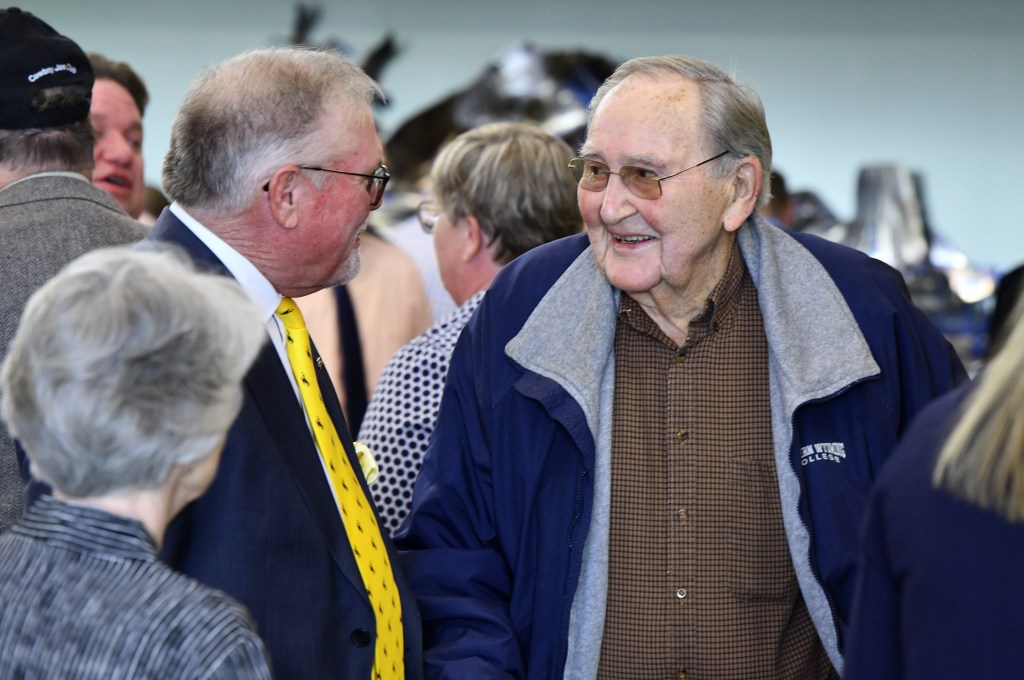
That’s why he was there at the 75th anniversary tailgate party, decades after his retirement. Despite not being officially tied to the college anymore, his commitment to it never wavered.
Looking back on everything that he’s been a part of, it’s safe to say that much of what the college is now, wouldn’t be here without him.
“When you look at programs like vet tech, welding, cosmetology and the rodeo activity over the years, they continue to bring lots of students to this campus. So without the foresight of Guido to say, ‘hey, we need to be a part of these things,’ that wouldn’t have happened,” Peterson said.
Smith passed away April 11, 2024, but his legacy will live on in the knowledge and memories of his impact on Eastern Wyoming College.

 Lancer Life
Leave a comment